
Balvatika
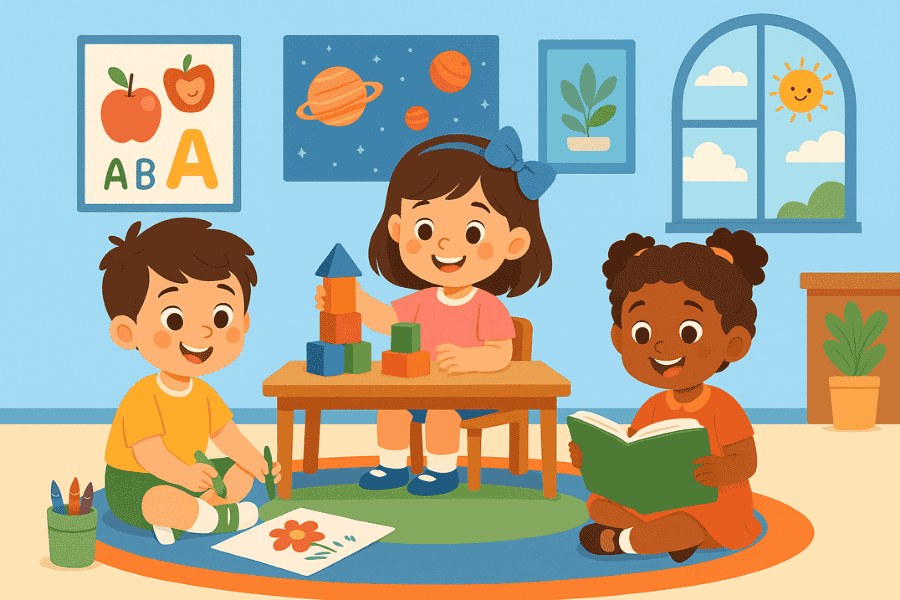
Balvatika is an early childhood education programme that serves as a fundamental base, which was brought into being through NEP 2020 and is mainly being implemented in Kendriya Vidyalaya schools. At Labsolute Innovation, we offer a broad scope of balvatika products, balvatika materials, and balvatika classroom setup solutions all meticulously tailored to the learning goals of Balvatika-I, II, and III,.
We have specially designed our balvatika products for Kendriya Vidyalaya to provide support for play-based, experiential learning while also complying with KVS guidelines and classroom requirements. If you are making kvs balvatika admission preparations, equipping a new classroom, or renovating your current facilities, no matter the case, our balvatika kit and equipment will assist the schools in fostering a child-friendly, well-organized educational setting that reflects the kendriya vidyalaya online education standards.
Being one of the most reliable balvatika products suppliers in India, we assist schools at the stage of kendriya vidyalaya admission by guaranteeing a prompt delivery of learning materials, furniture, and teaching aids appropriate for the age of students and required for the faculty to run the academic programme smoothly effectively immediately upon the academic school year start.
Balvatika Age Groups
- Balvatika-I: 3-4 years
- Balvatika-II: 4-5 years
- Balvatika-III: 5-6 years (similar to LKG/UKG)
Materials for balvatika and classroom equipment play an essential role in helping children develop appropriately at each stage.
Objectives of Balvatika Classroom Setup
The chief goal of Balvatika classroom setup is to:
- strengthen the acquisition of literacy and numeracy skills from an early age
- promote social-emotional development
- Enhance motor skills through the use of hands-on activities
- Provide children with a smooth transition to primary education
For this purpose, our balvatika teaching aids for KV schools are designed to provide the materials that are safe, attractive, and highly durable.
Importance of Quality Balvatika Materials
Top-quality Balvatika educational materials for KV schools have an essential role in:
- Helping to enhance the students’ attention span and engagement level
- Being a source of support for experiential and play-based learning
- Turning classrooms into inclusive spaces of learning for diverse learner styles
- Complying with safety standards, being tough, and for usage over a long period
Low-quality materials make it harder for students to learn and the cost of replacing them is more. This is the reason why it is important to choose a good balvatika products manufacturer or supplier.
Balvatika Products We Supply
As a complete Balvatika classroom materials supplier, we provide:
Balvatika Learning & Teaching Aids
- Alphabet and number learning kit
- Storytelling and language development tools
- Games for sorting, matching, and counting
- Materials for both cognitive and sensory development
Balvatika Classroom Equipment
- Child-sized tables and chairs
- Storage racks and activity shelves
- Writing and drawing boards
- Soft play mats and safe play areas
Balvatika Kits & Materials
- School ready-to-use Balvatika kit
- Material for setting up customized Balvatika school as per KVS norms
- Equipment for both indoor and outdoor activities
Advantages of Using Standardized Balvatika Products
- Supports NEP 2020 learning goals
- Classroom engagement and discipline get better
- Guarantees the development of age-appropriate skills
- Structured tools lighten up teacher’s workload
- Prepares kids better for the primary classes
Our Balvatika products for KV schools are not only intended for efficient teaching but also they meet the highest child safety standards.
Applications in Schools
Our Balvatika school products can be used in:
- Kendriya Vidyalaya (KV) schools
- Balvatika schools run by the government
- Private schools that are NEP 2020 compliant
- Early childhood development centers
They are usually utilized for:
- Setting up a new classroom
- Preparing for the academic year
- Admission after filing kvs admission form or kv admission form
- Upgrading infrastructure
Trusted Balvatika Products Supplier in India
Labsolute Innovation is a dependable balvatika school equipment supplier that provides last-to-last end solutions starting from planning stage to supply. In case you want balvatika products for KV schools, balvatika kits, or even a complete classroom material package, you can count on us for smooth Balvatika program implementation.
📞 Phone us now to get a catalog or a price quotation for your Balvatika classroom kit